

Top 5 Mistake Influencers Make With Affiliate Codes
Most influencers think they’re doing everything right with affiliate codes. You’re sharing them consistently. You’re mentioning them in content. Your…


You’ve shared your discount code.
You’ve mentioned it in captions, added it to stories, maybe even repeated it a few times to make sure your audience notices. And they do. You see engagement. You see clicks. Everything looks like it’s working.
But when it comes to actual usage, the numbers don’t match.
That’s the confusing part.
If people are interested, why aren’t they using your discount code?
It’s easy to assume the problem is with the audience. Maybe they’re not serious buyers. Maybe they just like to browse.
But that’s not really what’s happening.
The real issue sits in the gap between seeing a discount code and actually using it. And once you understand that gap, the entire problem starts to make sense.
On the surface, sharing a discount code feels like a complete strategy. You promote it, your audience sees it, and conversions should follow.
But real behavior works differently.
Most discount code usage doesn’t fail because people aren’t interested. It fails because the process isn’t aligned with how users actually shop.
This is one of the most common patterns.
A follower sees your content and notices the discount code. They think, “I’ll use this when I buy.”
At that moment, the intent is real.
But later becomes a problem.
By the time they’re actually ready to purchase, the code is no longer fresh in their mind. They don’t remember it clearly, and they don’t want to go back and search for it again.
So they continue without using it.
This small delay between discovery and action quietly reduces how often a discount code gets used.
Now let’s look at what happens at checkout.
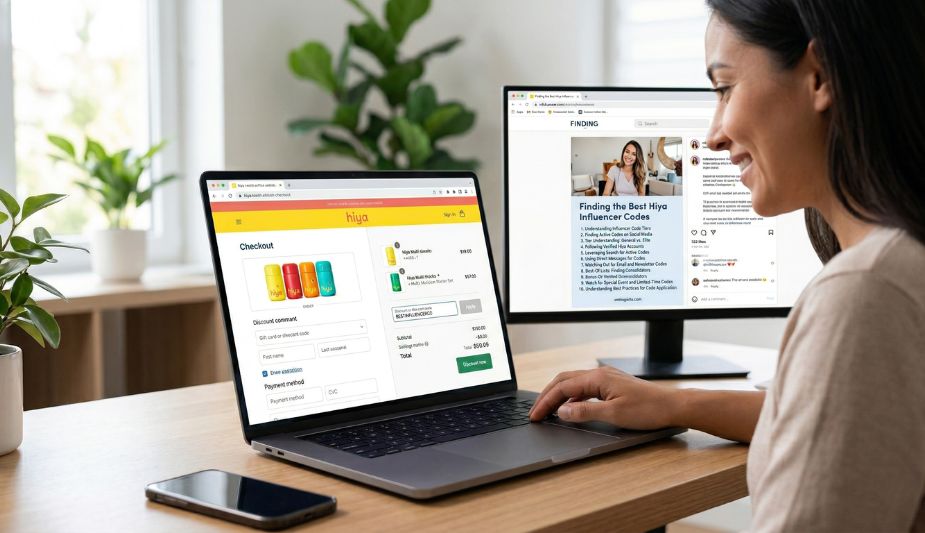
This is where the decision is made. The user is ready to buy. But if the discount code isn’t right there, it creates a disconnect.
They might remember that there was a code somewhere. But not exactly what it was.
At that point, they have two options:
Most choose the second option.
Not because they don’t care about saving, but because they don’t want to interrupt the process.
Let’s break the experience down.
For someone to use a discount code, they usually need to:
Each of these steps adds effort.
And every extra step reduces the chances of usage.
Most users won’t go through all of this. Even if the discount is valuable, convenience wins.
That’s why many discount codes go unused—not because they’re ineffective, but because they require too much from the user.
To understand the problem fully, you need to look at the entire journey.
Not just where the code is shared, but where the decision actually happens.
Most discount codes are discovered early.
They’re seen in posts, videos, or stories—when the user is still exploring. At that stage, interest is forming, but the purchase isn’t happening yet.
The actual buying decision happens later.
Sometimes hours later. Sometimes days later.
By then, the context has changed. The code is no longer in front of them. And unless it’s extremely easy to access, it gets forgotten.
This is where memory plays a role.
Even if someone intends to use a discount code, they often don’t remember it accurately. They might recall that there was a code, but not the exact details.
That uncertainty creates friction.
Instead of guessing or searching again, most users skip the step entirely. They choose certainty over savings.
This memory gap is one of the biggest reasons why discount codes don’t get used as often as expected.
Here’s the reality.
Even if a user can save money, they won’t always take the extra steps required to do it.
If using a discount code feels like effort, they’ll ignore it.
If it’s easy and available at the right moment, they’ll use it.
Convenience almost always wins over savings.
That’s the key shift in thinking. It’s not about making better codes. It’s about making them easier to use.
And once you focus on that, the results start to change.
You may also like: Coupon Codes That Turn Followers Into Paying Customers
By now, the pattern is clear.
The problem isn’t that your discount code isn’t good enough. It’s that it doesn’t show up when your audience actually needs it.
That’s exactly what Sploot fixes.
Instead of relying on your followers to remember or search for a discount code, Sploot brings it directly into the checkout experience. It shifts the entire process from effort-based to seamless.
So instead of hoping your audience uses your code, you make it easy for them to do it.
Let’s look at what typically happens today.
You share a discount code. Your audience sees it. Some even plan to use it.
But when they reach checkout:
So even though interest was there, the code doesn’t get used.
This leads to:
The issue isn’t promotion. It’s what happens after.
Now imagine a smoother experience.
Your follower shops normally. They reach checkout. And right there, relevant discount codes appear automatically.
No searching. No remembering.
That’s the shift Sploot creates.
It ensures that your discount code is visible at the exact moment your audience is ready to act. And because of that, the chances of it being used increase significantly.
Instead of relying on ideal behavior, it works with real behavior.
Let’s shift the focus to creators.
Most influencers assume the issue is with reach or audience intent. But in reality, the struggle comes from how the process is structured.
It’s easy to assume that if someone sees a discount code, they’ll remember it.
But that’s not how users behave.
People scroll through content quickly. They consume multiple posts, multiple creators, multiple offers. Expecting them to remember a specific code later is unrealistic.
So even interested users forget.
Another common assumption is that more visibility leads to more usage.
So creators repeat the code:
But visibility alone doesn’t guarantee action.
If the discount code isn’t available when the purchase happens, repetition doesn’t solve the problem.
Exposure creates awareness. It doesn’t ensure usage.
This is the biggest gap.
Most creators optimize for the moment of discovery—when the audience sees the code.
But the most important moment is checkout.
That’s where decisions are finalized. That’s where hesitation can be reduced. And that’s where a discount code has the most impact.
If you’re not optimizing for that moment, you’re missing the biggest opportunity.
You may also like: Sassy Woof Discount Code Helps Pet Owners Save on Accessories
Now that you understand the problem, let’s look at how to fix it.
You don’t need more content. You need better timing and less friction.
Instead of focusing only on where the code is seen, focus on where it’s used.
The ideal moment is when your audience is ready to buy. That’s when the impact of a discount code is highest.
If the code appears at that stage, usage naturally increases.
Every extra step reduces conversions.
If your audience has to:
They’re more likely to skip it.
Simplifying this process makes a direct impact. The easier it is to apply a discount code, the more likely it is to be used.
At some point, manual effort reaches its limit.
That’s where tools like Sploot come in.
Instead of relying on user behavior, they improve the system itself. They help bring your discount code into the checkout experience, where it matters most.
And when using a code becomes effortless, usage increases naturally.
That’s when your discount code starts delivering the results you expected all along.
Your followers are not ignoring your discount code.
They’re just not using it at the right moment.
That’s the shift.
You’ve already done the hard part—building trust, creating content, and getting attention. The missing piece is what happens after that. If the code isn’t available when your audience is ready to buy, it loses its impact.
This is why focusing only on visibility doesn’t work.
What matters is timing and convenience. When a discount code is easy to access at checkout, it stops being something users might use and becomes something they actually apply.
Tools like Sploot help make that shift happen. They remove the dependency on memory and effort, and replace it with a smoother experience.
And once that happens, the same discount code starts driving better results—without needing more content or more promotion.
Have questions? You’re in the right place. We’ve put together the most common inquiries to help guide you through every step. Whether you’re just getting started or looking to grow, the answers you need are right here.
Followers often don’t use a discount code because of timing and convenience issues. They may see the code in your content and intend to use it later, but by the time they reach checkout, they either forget it or don’t want to search for it again. This gap between discovery and usage is the main reason codes go unused. It’s not about lack of interest, but about how easy it is to apply the code when the purchase decision is made.
To increase usage, you need to focus on reducing friction and improving timing. Make sure the discount code is easy to access when your audience is ready to buy. Instead of relying only on visibility in content, think about how the code can be available during checkout. The easier it is to apply, the more likely your audience will use it. Small improvements in convenience can lead to significant increases in usage.
The best time to apply a discount code is at checkout. This is when users have already decided to make a purchase and are ready to complete the transaction. At this stage, even a small incentive can influence the final decision. If the code is easily available at this moment, it is much more likely to be used compared to when it is seen earlier in the buying journey.
Yes, discount codes can improve conversions when used effectively. They provide an extra incentive for users to complete a purchase and reduce hesitation. However, their success depends on how easy they are to use. If users have to remember or search for the code, the impact decreases. When codes are accessible at the right moment, they can significantly improve conversion rates.
Users forget to use a discount code because there is usually a delay between when they see it and when they make a purchase. During this time, they consume more content and encounter other distractions. By the time they reach checkout, the code is no longer top of mind. This memory gap is one of the biggest reasons codes go unused, even when users initially planned to apply them.
Yes, improving the checkout experience is one of the most effective ways to increase discount code usage. When codes are visible and easy to apply at the final step, users are more likely to use them. Removing the need to search or remember details reduces friction and makes the process smoother. This directly leads to higher usage and better conversion outcomes.
Sploot helps increase discount code usage by bringing relevant codes directly into the checkout experience. Instead of relying on users to remember or search for a code, it surfaces options at the moment they are ready to buy. This makes the process more convenient and increases the likelihood of application. By reducing effort, it improves both usage rates and overall conversion performance.
Yes, discount codes are still highly effective for influencers when used correctly. They remain one of the simplest ways to drive conversions and track performance. However, their effectiveness depends on how well they fit into the buying journey. When they are easy to access and apply, they continue to deliver strong results. When they rely too much on user effort, their impact decreases.
Pro tips, trends, and success stories to help you scale your influence. Pro tips, trends, and success stories to help you scale your influence. Pro tips, trends, and success stories to help you scale your influence.
Most influencers think they’re doing everything right with affiliate codes. You’re sharing them consistently. You’re mentioning them in content. Your…
Parents today are more conscious than ever about what their kids consume. From clean ingredients to daily nutrition, there’s a…

There’s a common belief most influencers follow. If you want to grow your affiliate revenue, you need to create more…